

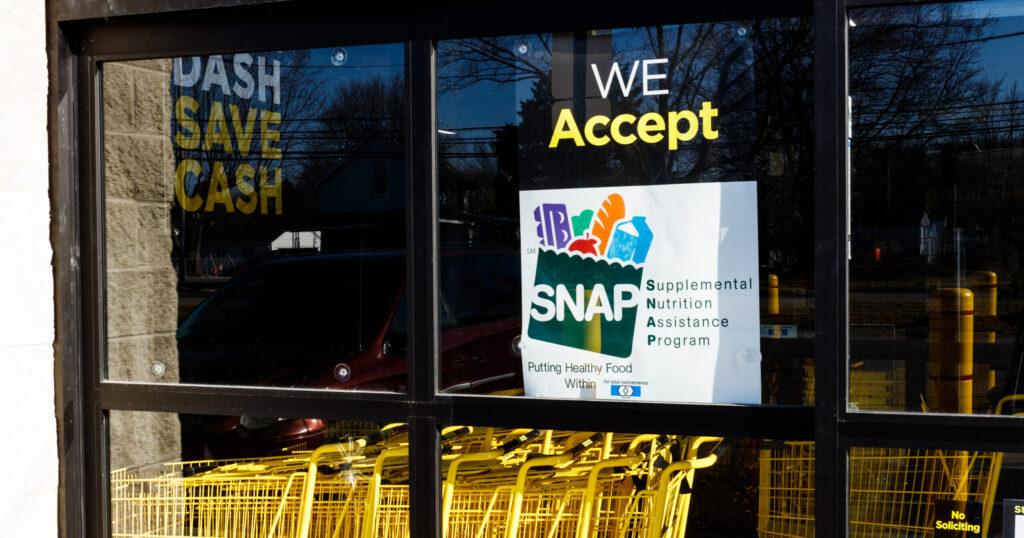
At a glance:
- HR 1 requires states to pay a share of the cost of the Supplemental Nutrition Assistance Program (SNAP)
- Maine’s share will be $62.5 to $93.8 million in the first biennial budget
- Most states will pay similar portions of SNAP costs. All to pay for tax cuts for billionaires.
- If there were a recession Maine’s costs would increase $16.6 to $24.7 million in the first biennium
The Republican “Big Beautiful Bill” (HR 1) gave massive tax cuts to wealthy households and large corporations. The cuts are partially paid for by cutting $295 billion from SNAP over the next ten years, a massive transfer of money from public assistance to the bank accounts of the wealthy.
The cuts from HR 1 are achieved by shifting costs to states and cutting access to essential food and medical assistance. Over the year since the bill’s signing, 9,000 Mainers have lost Medicaid, 3,000 of them are children. Almost 14,000 have lost SNAP during the same period, over 4,000 are children. Before HR 1, the federal government paid all benefits for SNAP and the state paid part of administrative costs. After HR 1, states will pay more administrative costs and, for the first time, a portion of benefits.
The cost shift is a moving target for state budget makers
Under HR 1, the share of SNAP benefits a state must pay depends on its payment error rate. These errors are largely the result of the difficulty of administering a program for households whose income changes frequently because of fluctuating work hours or multiple jobs. When payments are incorrect, benefits are later adjusted to correct the error, but the mistakes still count toward the state’s error rate.
The law sets three cost-sharing tiers:
The thresholds are unrealistic. The most recent median error rate was 9.5% meaning most states, including Maine, fall into the highest cost-sharing categories.
Maine’s error rate has exceeded 10% every year since before the pandemic. While it improved after the disruptions caused by COVID-era policy changes, it rose again in 2025. Unless Maine’s error rate drops by nearly a full percentage point in 2026, a highly unlikely outcome, the state will pay the maximum 15% share in 2028.
A new cost of nearly $94 million
Maine has already invested in additional eligibility staff and technology upgrades to bring down error rates. But those investments will take years to produce results, too late to affect Maine’s cost share.
As a result, policymakers should plan for the highest cost scenario.
Over the next two-year state budget:
- A 10% share would cost Maine about $62.5 million.
- A 15% share would cost roughly $93.8 million.
That’s money the state will have to find elsewhere in the budget.
The cost shift will be worse during recessions
The new funding structure becomes worse during an economic downturn.
During a recession, more people qualify for SNAP while state tax revenues decline. Under HR 1, that means Maine would face rising SNAP costs while collecting less revenue.
MECEP projects that a recession beginning now would increase monthly SNAP enrollment by more than 83,000 people by 2030. Compared with a typical economy, that would increase SNAP spending by more than $400 million over the period.
Due to HR 1’s cost share, the recession would add approximately:
- $40 million in additional state costs under a 10% share.
- $60 million under a 15% share.
The law makes state budgets less stable precisely when they are under the greatest stress.
Maine should prepare now
The “Big Beautiful Bill” doesn’t simply reduce federal support for struggling families. It shifts financial responsibility onto states. For Maine, that means substantially higher SNAP costs, greater pressure on future budgets, and increased fiscal risk during the next recession.
State leaders should begin preparing now. Building sustainable revenue sources before the next economic downturn will be far easier than trying to raise revenue or make deep budget cuts in the middle of a crisis.