


The State doesn’t have adequate funding for health care, housing, and many other pressing needs. The fairest way to fix this is by asking the wealthiest people and big businesses to pay more in income taxes. This year, the Governor and Legislature enacted some new progressive tax laws but also passed others that made the state’s tax code more regressive (i.e. asked more of those who have the least).
Overview
- Mainers face many critical needs the State is unable to address due to inadequate funding
- Families face long waits for health care, child care subsidies have evaporated, workers in critical fields lack fair pay, housing is unaffordable, and core state systems like legal defense and child protection are overwhelmed, among many other challenges
- The State needs additional funding to address many urgent problems and also faces federal funding cuts that will create further funding challenges
- The fairest way to raise more funds is through income taxes on wealthy individuals and corporations, which ensures those with greater ability to pay contribute more
- Some tax fairness gains were made this year — such as taxing million-dollar home sales and boosting the child tax credit — but other regressive measures and expanded corporate tax breaks undermined progress
This year, Maine came closer than ever in recent memory to enacting new laws that would significantly reshape Maine’s income tax code to make it fairer. These bills would advance tax fairness for working Mainers by asking more of the wealthy and big corporations, many who still pay a lower effective tax rate than everyday Mainers. Failure to enact these bills means many Mainers will suffer due to inadequate access to services that remain unfunded.
Average effective tax rate by income range, 2023
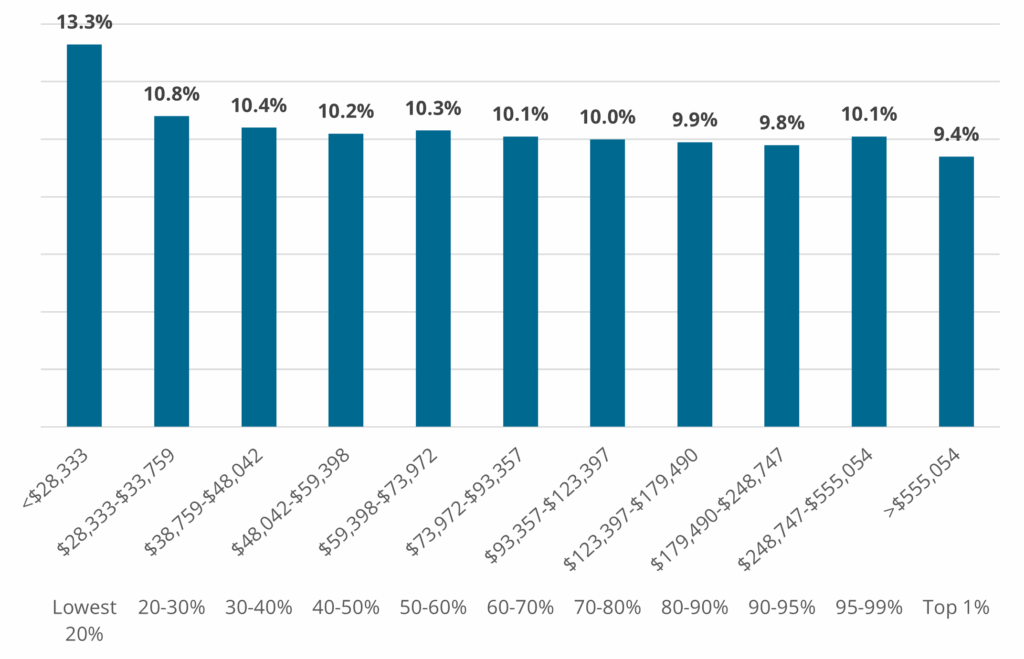
The average effective tax rate, or total percentage of income paid in all types of taxes after deductions and credits, is greater for Mainers with lower incomes than it is for any other income group.
Source: Maine Revenue Services data
Services are inadequate and Mainers are suffering
There simply isn’t enough revenue coming in to cover the rising costs of many important programs and services Mainers rely on. Federal cuts will further diminish resources to address unmet needs.
- 1 in 10 Maine children live in poverty
- 1 in 10 Mainers experience food insecurity
- Families face months long waiting lists for children to access mental and behavioral health services. Nursing homes and rural hospitals face the threat of closure due to inadequate MaineCare reimbursements.
- State workers are not paid competitively to their private sector counterparts, resulting in high job vacancies and inadequate services
- State pensions have not kept up with the cost of inflation
- Families counting on subsidies for affordable child care found the promised funding evaporated within months
- Maine’s legal defense system is failing to uphold Mainers’ Constitutional right to an attorney
- The state is in a housing shortage crisis and housing is increasingly unaffordable
- Maine’s child protection system has overburdened caseworkers leading to tragic outcomes for Maine children
- Underfunding of school construction is leading to costly deferred maintenance and school closures
- Inadequate teacher and support staff pay
- Delays in remediation of PFAS (“forever chemicals”) are impacting the health and livelihood of Mainers
- Underfunding of family planning and reproductive health services
- Property taxes increases are untenable for many older Mainers
Many Mainers are already suffering due to poor access to care and inadequate services. These are just some challenges among many others the state is facing that it does not have the revenue to address. Federal funding cuts threaten to further imperil many important services and supports for Mainers.
The State has taken positive steps, but could lose ground without additional funding
Despite these challenges, the state has made many important gains to improve the lives of Mainers in recent years, including:
- Paid family and medical leave
- Eviction prevention pilot program
- Expanded housing assistance
- MaineCare expansion
- Expanded health care coverage for children and pregnant people
- Dental care
- Expanded Medicare Savings Program to help older Mainers afford prescription drugs
- Free community college
- Meeting 55% education funding and 5% municipal revenue sharing obligations
- Cost of living increases for direct care workers
- Child care wage supplements
- Free school meals
- Climate change mitigation programs
- Land conservation and preservation
- Supports for parents with low income
- Establishment of the Permanent Commission on the Status of Racial, Indigenous & Tribal Populations
- Expansion of the Property Tax Fairness Credit
But due to inadequate funding, some of these efforts — including free community college, eviction prevention, and child care wage supplements — have been discontinued in future years or are under threat.
Lawmakers and the state are in an untenable position — they have made agonizing trade-offs to meet the constitutional requirement to balance the budget each year. The state needs more revenue to meet these obligations. We should not have to choose between the health and well-being of children, low wage workers, older Mainers, and other vulnerable populations. There is not enough existing funding to support these priorities.
Raising progressive revenue is the solution
Progressive revenue — raising greater funds from those who have the most — is the solution to meeting these needs. The income tax is Maine’s most progressive revenue stream because it asks more of those who have greater ability to pay — those with higher incomes. Unlike sales taxes and property taxes, which ask more of everyone, income taxes ask more of those who can most afford it. We have enough resources in our state to meet everyone’s needs, but if we continue to allow wealth inequality to worsen, more of those resources will continue to consolidate in the hands of those who need it least while others cannot even access basic needs.
Income tax bills are in limbo
Last session, several progressive revenue measures were introduced and passed by the legislature to raise hundreds of millions of dollars in funding for priorities including preK-12 education and support for the agricultural economy. But despite legislative support, those efforts came up short when the Governor threatened to veto them.
Now these bills, including those to increase income taxes on corporations and higher earners, are in a holding pattern as we wait to see what the Governor and the legislature will do next. Although they were passed, they have been carried over to the next Legislative session which will begin in January 2026.
Moderate tax fairness gains made alongside lost ground
A handful of measures to advance tax fairness became law this year, but many others backpedaled on Maine’s progress. Progressive measures passed by the legislature and signed by the Governor included:
- increasing the real estate transfer tax on million-dollar homes to fund affordable housing
- phasing out the tax deduction on pension income for higher earners
- doubling Maine’s child tax credit for children under age 6 by phasing out the benefit for higher earners
But along with these progressive measures, the Governor and the legislature put regressive measures into place. These include increasing taxes on cigarettes, cannabis, and streaming services, which will more acutely impact Mainers with lower incomes; and extending and expanding three big business tax breaks costing millions of dollars per year and undercutting the fairness of Maine’s tax code.
There were many better policy options available this year to both raise revenue and advance tax fairness the state could have pursued instead. In total, these policy choices made Maine’s tax code less fair.
Impact of 2025 state tax changes, by income (% change)
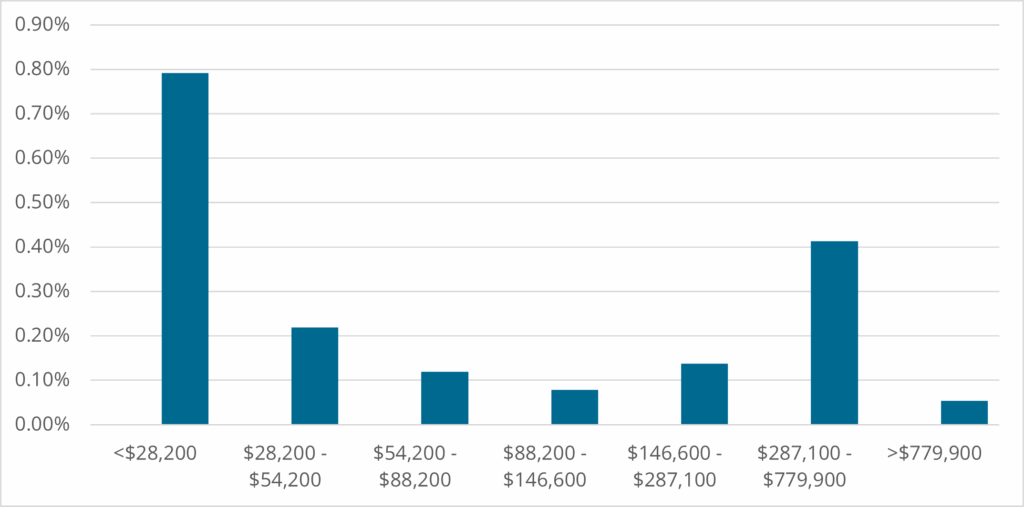
People with lower incomes saw the greatest percentage increase in their overall taxes.

The primary driver of the tax increase was the cigarette tax, which had the greatest impact on Mainers with lower income.
Source: Institute on Taxation and Economic Policy data
Note: Negative numbers indicate average tax decrease
It’s time for leaders and the Governor to act
Maine lawmakers have shown they want to create a fairer tax system by raising income taxes on the wealthy and corporations so they pay more than everyday Mainers. With federal cuts to SNAP, Medicaid, and other important programs leaving big holes in the state budget, legislative leaders have a responsibility to put these proposals on the Governor’s desk, and the Governor has a responsibility to sign these bills into law. Raising income taxes on the wealthy and corporations will make the tax system fairer and bring in more money Maine urgently needs to support important priorities. We still have a chance to undo program cuts made at the state level, and counter the harmful effects of those at the federal level. It’s past time to act.