

At a glance:
- Governor Mills’ budget proposal delays up to $174 million in bills — including teacher raises and tax breaks that get more expensive over time — that will come due in the next few years
- Starting in 2027, Maine will most likely have to help cover the cost of SNAP benefits, which could cost the state as much as $53 million every year
- Because tax changes take time to work, any adjustments passed this year won’t bring in new revenue until 2028, making immediate action the only way to cover upcoming obligations
- Lawmakers can fix this by rejecting unnecessary tax breaks and raising sustainable revenue from wealthy households and corporations, but if they don’t act soon, the problem will only get bigger and harder to solve
Maine lawmakers have a choice this budget cycle. They can pass a budget that, while technically in balance this year, pushes significant costs into future years. Or they can anticipate those costs now and lay the necessary groundwork to ensure the state has the revenue needed to cover new unfunded initiatives proposed by Governor Mills and avoid the worst of the impacts associated with new costs the federal government is imposing starting in 2027.
Federal cost shifts
In addition to spending virtually every dollar of predicted revenue in the current budget cycle, Governor Mills is proposing a number of initiatives whose costs rise dramatically in the following years. And while the costs imposed by Congress and President Trump in the 2025 reconciliation law won’t appear until next year, the state needs to pass taxation measures now if it is to see the revenue in time to pay the bills.
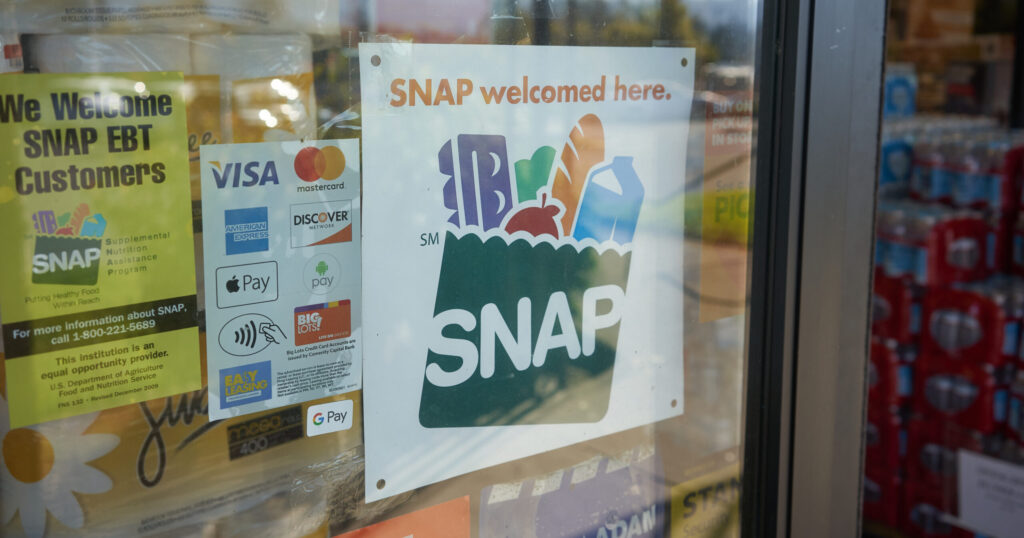
Lawmakers have known for months that the federal reconciliation bill passed in July shifts significant costs in the Supplemental Nutrition Assistance Program (SNAP) from the federal government onto states. The exact amount will depend on the state’s payment error rate in federal fiscal year 2025 or 2026.
Maine’s most recent payment error rate, in 2024, was 10.3% which was slightly below the national average, but still enough to require the state to pay 15% of the cost of SNAP benefits, beginning in October 2027. This cost could be as large as $53 million per year. The Governor is proposing investments to reduce the state’s payment error rate, but these are not guaranteed to work and it’s highly unlikely they would bring the error rate below 6%, which is required to avoid any cost sharing. Even a payment error rate of 8% to 10% would necessitate a state cost of up to $35 million per year.
The power of progressive revenue
Because this is a large, ongoing expense, it requires a long-term solution. The most realistic option is to raise ongoing revenue, particularly from wealthy households and large corporations. And because tax changes take time to generate revenue, now is the time to act. Tax changes passed this year won’t take effect until the 2027 tax year which means the bulk of revenue won’t be realized by the state until 2028.
Hidden costs in the governor’s budget
The governor’s budget proposal includes some worthy initiatives that deserve to be paid for sustainably. Her plan to increase the minimum salary for public school teachers to $50,000 a year, for example, doesn’t begin phasing in until the 2027-2028 school year, meaning there is no cost this fiscal year but a bill of $9 million per year by state fiscal year 2029.
On the other hand, there are also proposals which lawmakers could simply cut to save money. For example, in conforming to the new federal tax code, the governor wants to adopt several provisions on a delayed timeline, which reduces the cost in this budget but pushes the full cost out. Phasing in the research and development credit for large businesses only incurs a cost of $15.3 million in this budget cycle, but that increases to $38.8 million a year by 2029.
Another tax provision — adding a charitable deduction for filers who elect to take the standard deduction — kicks in during state fiscal year 2028 and rises to $10 million a year in 2029.
In her change package, the governor is proposing decoupling from tax breaks for investments in so-called “opportunity zones” which pad the profits of real estate developers without improving conditions for residents of those areas. Decoupling is the right decision, but the governor is only proposing decoupling for two years (2026 and 2027) which saves $5 million in the short term but means the cost rises to $9.6 million per year in the next budget cycle.
All told, these changes create expenses of up to $174 million over the next biennium that are not budgeted for in the Governor’s proposal.
A band-aid on the highway fund
To make matters worse, the Governor is continuing to prop up the state’s Highway Fund with $13 million from the general fund. The fundamental problem facing the highway fund is that its main source of revenue — the gas tax — hasn’t been changed in fifteen years. Instead of fixing this and asking the tourists and commercial trucks who use Maine roads to kick in a little more, the governor is proposing a one-time fix to an ongoing problem. While the scale of the next shortfall in the highway fund isn’t clear, the revenue forecasting committee predicts revenues in the next budget cycle will be essentially unchanged compared to this biennium, while wages and material costs will continue to increase.
The path forward
Lawmakers face a clear choice: act now or leave a much bigger problem for the next budget. By rejecting unnecessary tax breaks and raising sustainable revenue from the wealthiest Mainers and large corporations, they can get ahead of these costs and maintain continuity of services for Maine people. Delaying action doesn’t avoid the problem — it makes it harder and more expensive to solve.